
Supporting Hospice Patients with Dementia and PTSD During July 4th Fireworks
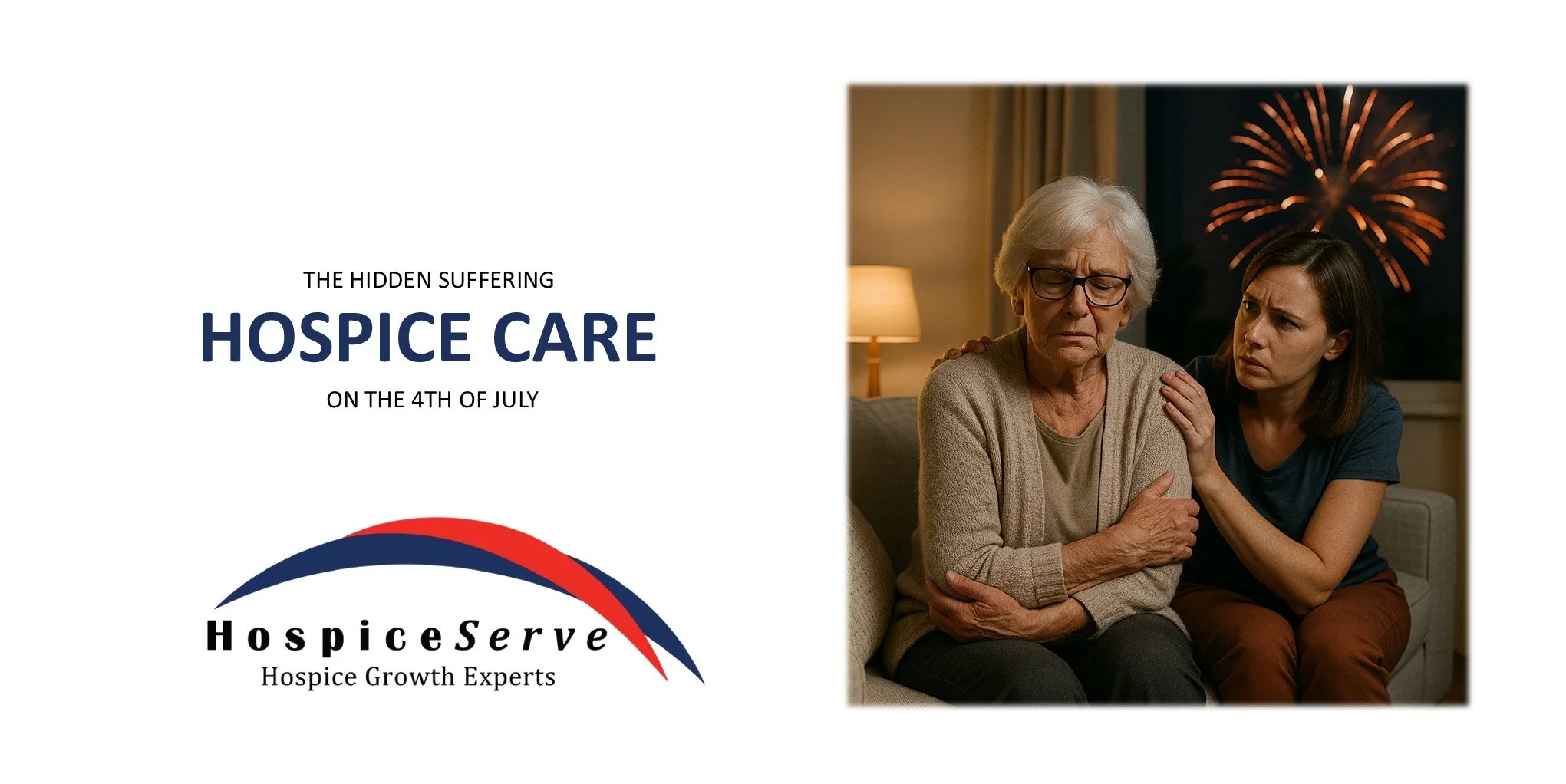
For many, the 4th of July is a joyful celebration filled with fireworks, barbecues, and family gatherings. But for individuals living with dementia, Alzheimer’s, or post-traumatic stress disorder (PTSD), the holiday can be deeply distressing.
The very elements that make the 4th of July festive—loud fireworks, bright lights, and late-night disruptions—can trigger confusion, anxiety, and emotional distress in hospice patients. Understanding these challenges allows caregivers and families to create a calmer, safer environment during the holiday.
Why Fireworks Can Be Harmful
Loud and unpredictable sounds are especially problematic for people living with cognitive or emotional conditions. Fireworks often explode during the evening or late at night—when many patients are already in bed. This can cause startled awakenings, heightened confusion, and increased agitation.
For individuals with dementia or Alzheimer’s, fireworks can disrupt their sense of time and place. Sudden noises may worsen sundowning, a condition in which agitation and aggression increase after sunset.
For those with PTSD, particularly veterans, the sharp sounds and flashes can act as trauma triggers. Even when patients intellectually understand what’s happening, their emotional and physical responses may be beyond their control.
Tips for Caregivers During July 4th
Whether your loved one is in a hospice facility or at home, there are steps you can take to reduce the stress and protect their peace of mind:
Plan a getaway: If you live in an area where fireworks are frequent, consider taking your loved one to a quieter location during peak evening hours. A brief stay at a hotel or secluded retreat may provide a helpful break. Coordinate with the hospice care team beforehand to ensure this is appropriate.
Stay with them: Your calm presence can make a big difference. Sit with your loved one, talk gently, or engage in soothing activities to redirect their attention.
Use noise-reducing tools: Soft headphones, earplugs, or a white noise machine can help muffle the outside noise and create a more controlled environment.
Talk with the hospice team: Hospice staff can offer medication options, calming techniques, or alternative plans to support your loved one during this time.
Every person’s experience is unique, and small efforts can have a big impact. If you're concerned about how the July 4th holiday may affect your loved one in hospice care, reach out to our hospice team. We’re here to help you prepare with compassion, creativity, and confidence.